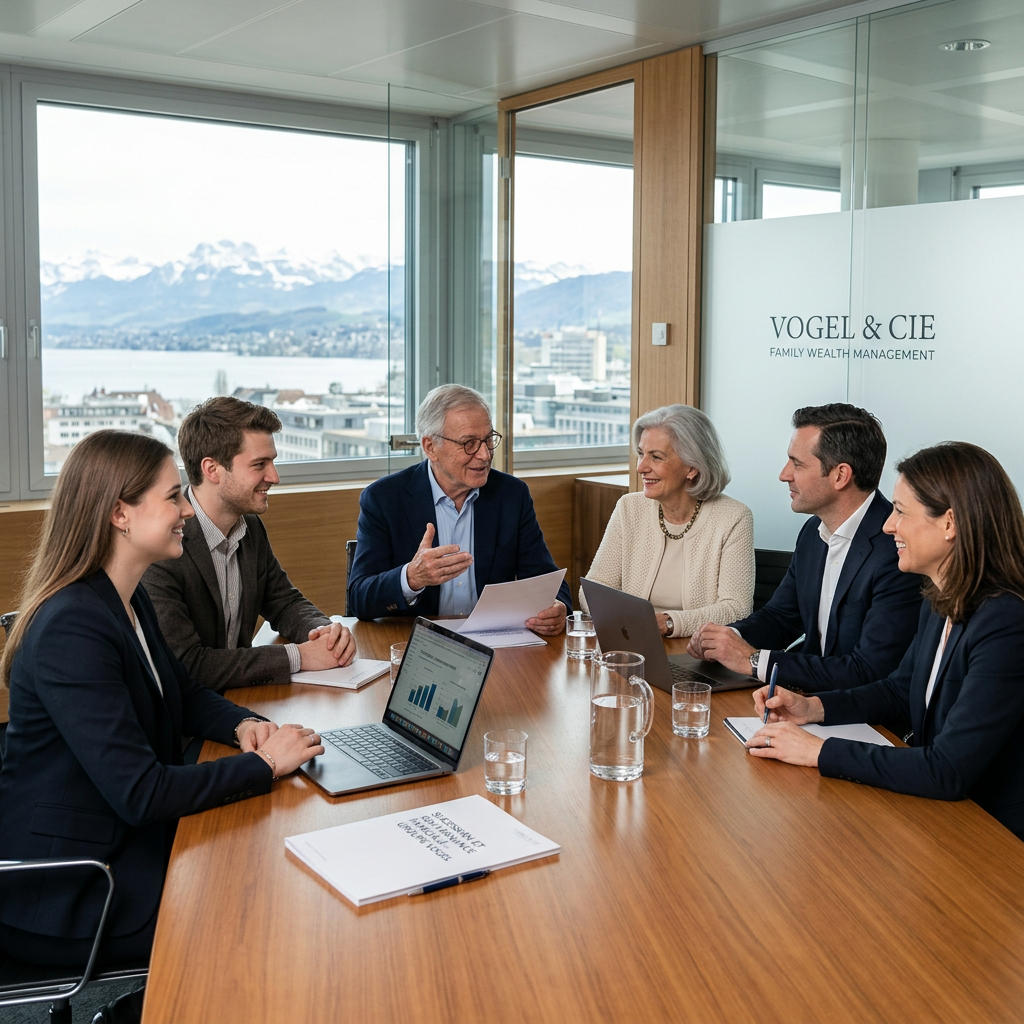
The challenges of family business succession in Switzerland: strategies for a successful transition
Handing over a family business in Switzerland is a major challenge for many entrepreneurs. With more than 70,000 SMEs due to change hands in the coming years, according to SECO,
Handing over a family business in Switzerland is one of the most complex challenges an entrepreneur can face. With more than 70,000 SMEs due to change hands in the coming years, according to the State Secretariat for Economic Affairs (SECO), business succession has become a major economic issue for French-speaking Switzerland and the country as a whole. Yet many business owners approach this process without sufficient preparation, at the risk of jeopardising the fruit of a lifetime's work.
Whether the business is handed over to a family member, to employees or to an external buyer, each scenario carries its own legal, tax and human complexities. In this article, we explore the main obstacles to family business succession in Switzerland and offer you concrete strategies to make a success of this crucial transition.
Why is family business succession so complex in Switzerland?
Family businesses are the backbone of the Swiss economy. They account for around 85% of Swiss companies and employ a majority of the working population. Yet fewer than a third of them make it past the second generation, and fewer than a tenth reach the third.
This reality is explained by several factors specific to the French-speaking Swiss and national context:
- Ageing owners: A large proportion of Swiss SME owners are now over 55 and will have to hand over their business within the next decade.
- Legal and tax complexity: Switzerland offers a favourable framework, but the aspects relating to inheritance law, gift tax and corporate structures can quickly become a maze.
- The emotional dimension: Handing over a business you founded or inherited from your parents is a deeply personal act, often a source of family conflict.
- Valuing the business: Determining the fair price of a family-owned SME is an inexact science that combines financial data, intangible assets and growth prospects.
The three most common succession scenarios in French-speaking Switzerland
1. Intergenerational family succession
Handing over to a family member — a child, nephew or niece — remains the preferred scenario for many business owners. It preserves the identity and values of the business while maintaining continuity in the relationship with customers and employees.
However, this option involves several prerequisites:
- Making sure the designated successor has the necessary management skills
- Anticipating tensions between potential heirs through a well-drafted inheritance agreement
- Planning a transition period long enough for an effective transfer of know-how
- Structuring the transaction in a tax-efficient way (gift, sale at a reduced price, usufruct...)
2. The management buy-out (MBO) or acquisition by employees
When there is no family successor, or when the children do not wish to take over the business, an acquisition by senior managers or key employees is an increasingly popular alternative in French-speaking Switzerland.
This formula has the advantage of entrusting the business to people who know the internal culture, the customers and the processes inside out. It does, however, require solid financing, often structured with the help of banks and regional private equity funds such as the Banque Cantonale Vaudoise or business angels active in French-speaking Switzerland.
3. Sale to an external buyer
Selling to a third party — whether an independent entrepreneur, a competitor or an industrial group — often makes it possible to maximise the financial value of the sale. It is also the most formalised route, requiring rigorous professional support.
In this case, preparing a complete information memorandum, setting up a data room and conducting thorough due diligence are essential steps to secure the transaction and best defend the seller's interests.
The five fatal mistakes to avoid in a business transfer
The experience of business transfer professionals in French-speaking Switzerland highlights recurring mistakes that can jeopardise an otherwise well-advanced sale:
- Waiting too long to plan: A business transfer is ideally prepared three to five years in advance. Acting under pressure weakens the negotiation and reduces the options available.
- Overvaluing the business: The founder's emotional attachment can lead to an unrealistic valuation that drives serious buyers away.
- Neglecting the human dimension: Employees, loyal customers and business partners must be included in the strategic thinking; otherwise the transfer can trigger damaging departures.
- Underestimating tax complexity: Poor structuring of the transaction can generate significant tax charges for both the seller and the buyer. Calling on a tax adviser specialising in SME transfers is essential.
- Neglecting confidentiality: Premature disclosure of the sale project can create anxiety among employees, customers and suppliers, thereby weakening the seller's negotiating position.
Concrete strategies for a successful transfer of your SME in Switzerland
Anticipate and structure the project well in advance
The key to a successful transfer lies in anticipation. It is recommended to start thinking about your exit strategy as soon as the business reaches maturity, without waiting for a triggering event such as a health problem or an unexpected opportunity.
This preparation phase includes in particular:
- A complete internal audit (financial, legal, operational and human)
- Updating contracts, patents and intellectual property rights
- Reducing personal dependence on the owner (in particular by documenting key processes)
- Optimising the company's legal structure to facilitate the sale
Surround yourself with the right SME transfer experts
A business transfer calls on a wide range of skills. In French-speaking Switzerland, it is strongly advised to assemble a multidisciplinary team including:
- An M&A adviser or broker specialising in SME sales, to identify potential buyers and structure the negotiation
- A business lawyer with a command of company law, inheritance law and cantonal specificities (Vaud, Geneva, Fribourg, Neuchâtel...)
- A chartered accountant or fiduciary to optimise the tax aspects of the transaction
- A wealth management adviser to plan the reinvestment of the proceeds from the sale
Value your business correctly
Valuing a Swiss SME is a delicate exercise that draws on several complementary methods: the EBITDA multiples method, the discounted cash flow (DCF) method and the net asset method. For family businesses, intangible assets such as the brand, the customer portfolio, proprietary know-how and reputation must also be taken into account.
A realistic, documented valuation is your best asset for lending credibility to your case with buyers and with the banks financing the acquisition.
Take care of the post-sale transition phase
The transfer does not end on the day the sale agreement is signed. A period of support for the buyer — generally six to eighteen months — is often provided for contractually to guarantee business continuity and the durability of customer relationships.
This transition phase is also an opportunity for the seller to prepare their own next chapter: a new professional activity, involvement in a non-profit, mentoring young entrepreneurs... A well-orchestrated handover benefits everyone involved.
Support and resources available to sellers in French-speaking Switzerland
Swiss entrepreneurs are not alone in facing the challenges of succession. Several organisations offer structured support:
- SECO and its information programmes on business succession
- The French-speaking Swiss chambers of commerce (CCIG in Geneva, CVCI in Lausanne, CCIF in Fribourg), which offer advice and networking
- The cantonal banks, which often have dedicated services for financing SME transfers
- Fiduciaries and specialised advisers in business transfers active in French-speaking Switzerland
- Matchmaking platforms connecting sellers and buyers, such as PME Suisse or certain regional business exchanges
Conclusion: prepare your business succession today
Handing over a family business in French-speaking Switzerland is much more than a simple financial transaction. It is a life project that requires anticipation, method and appropriate professional support. The earlier you start, the more options and levers you will have to optimise the terms of your sale.
Faced with the 70,000 transfers on the horizon in the coming years, the entrepreneurs who have prepared their succession rigorously will be the ones who best preserve the value they spent decades building — and who ensure that their entrepreneurial legacy lives on.
Are you considering selling your business in French-speaking Switzerland? Consult an SME transfer specialist for an initial confidential and personalised assessment. Every situation is unique, and tailored support makes all the difference.
On the same topic
The complete Seller's Guide: valuation, steps, tax and due diligence, written for owner-managers of French-speaking Swiss SMEs.
Read the Seller's Guide