Your SME Depends Entirely on You: How a Buyer Handles Key-Person Risk
In most French-speaking Swiss SMEs, the owner-manager is at once the lead salesperson, the technical guarantor and the company's living memory. That is not a management flaw, but every buyer asks the same question: what remains once you have gone? Here is how a direct buyer measures this key-person risk, the real effect it has on the structure of a transaction, and what you can prepare before selling.
You have built your business over many years. You know every customer, every supplier, every technical subtlety. That is precisely what gives it its value — and it is also what raises an unavoidable question when the time comes to sell: what happens when you are no longer there? This article explains how a direct buyer analyses this risk, and why it is not an obstacle to a successful business transfer.
The reality: in a French-speaking Swiss SME, the owner is often irreplaceable — and that is normal
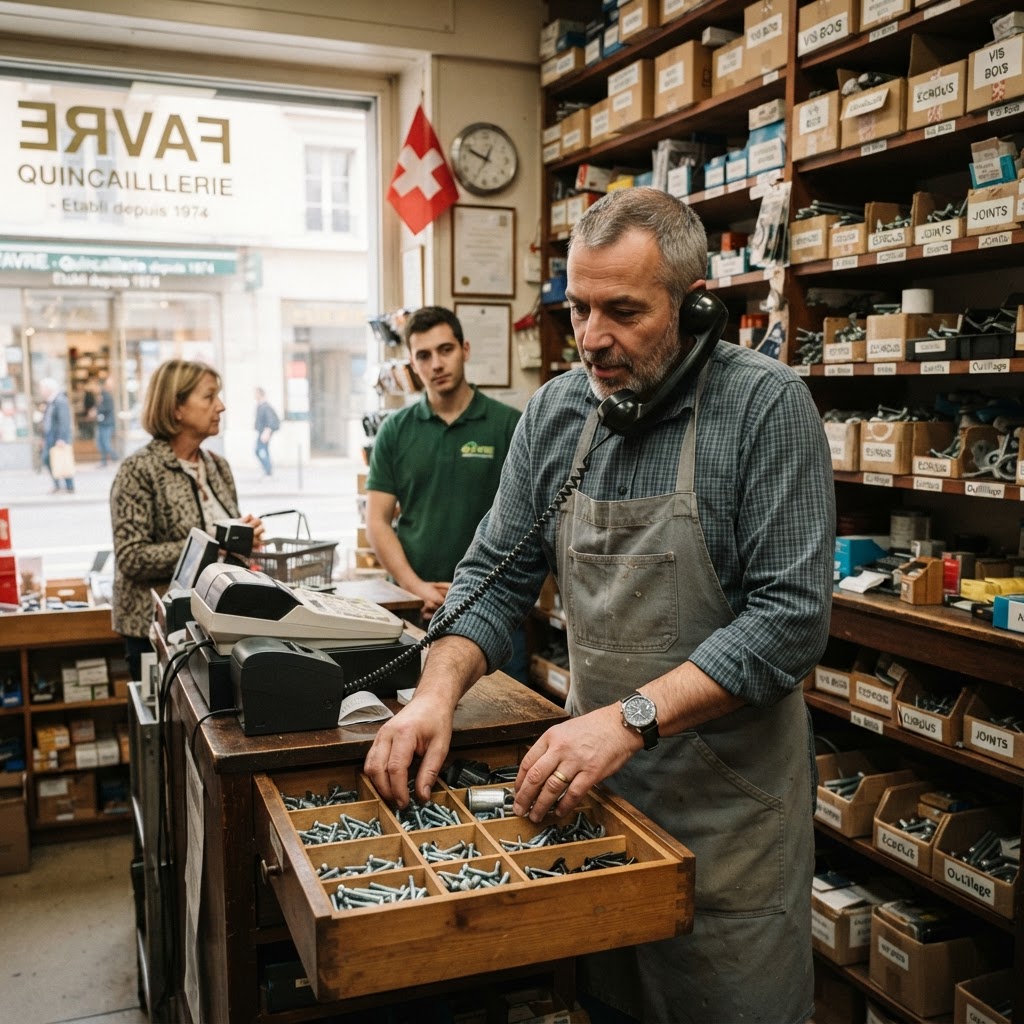
In the vast majority of SMEs in French-speaking Switzerland, the owner-manager holds several roles at once. They are the main salesperson, the technical guarantor of the services delivered, the project lead on complex jobs and the living memory of the company. They know why a given customer insists on a particular procedure, why a given supplier accepts non-standard terms, and which employee can handle which situation.
This is not a management flaw. It is the reality of most businesses with between five and fifty employees, where the owner's closeness to the business is exactly what sets it apart from the large groups. Your customers trust you personally. That is a considerable asset.
But this reality raises a legitimate question for any serious buyer: how much of the business rests on you as a person, and how much rests on the organisation itself? That question deserves an honest answer — not to diminish what you have built, but to structure the transfer realistically.
What key-person risk means and why it matters
The term key-person risk — sometimes called key-man risk — refers to a company's vulnerability to the sudden loss of an individual whose role is central and hard to replace. In the context of an SME sale, this risk shows up concretely in several forms:
- Personal customer relationships: several of your best customers buy from you because they trust you personally. If you leave, will they still buy?
- Undocumented technical know-how: certain key skills exist only in your head — methods, judgement calls, practices that have never been written down.
- Qualifications or licences attached to you personally: in some sectors, you are the one who is licensed, certified or registered as the qualified technical manager. Without you, the authorisation to operate may be at risk.
- Bank signing authority and non-delegated decisions: every important decision goes through you, and banks or financial partners identify you personally.
- Suppliers dealt with on a handshake: terms negotiated on personal trust, without a formal contract, which could be called into question when management changes.
Each of these elements can be measured. None is a deal-breaker on its own. Together, they form a picture that any serious acquirer seeks to understand before committing.
How a direct buyer measures this risk in practice
When analysing an SME with a view to acquiring it, several practical questions make it possible to gauge the real level of dependency:
The three-month absence question
This is often the most revealing. If you were unavailable for three months, what would happen? Would the company keep delivering its services? Could someone take the day-to-day decisions? Would customers be served properly? The answers to these questions map out the scope of the risk accurately.
Revenue concentration
What share of revenue comes from customers you personally brought in and manage on your own? Are there one or more customers whose departure would significantly weaken the business? This concentration — whether or not it is tied to you personally — is a central element of the analysis.
The existence of a second tier of management
Are there one or more people in your company capable of taking on broader responsibilities? A workshop foreman, a sales manager, a deputy managing director? Their presence considerably reduces the risk perceived by a buyer.
Written processes and operational documentation
Are the essential procedures documented? Are contracts with major customers and suppliers formalised? Is there a minimum of traceability around internal practices? A total absence of documentation is not a blocker, but it lengthens the transition period required.
The real effect on the transaction: deal structure, not a blocker
It is important to be clear on this point: key-person risk does not block an acquisition. Companies that depend heavily on their owner are successfully acquired every year in French-speaking Switzerland. This risk mainly influences the structure of the transaction, not whether it happens.
In concrete terms, the higher the dependency, the more safeguards the buyer needs in the way the deal is organised:
- A longer handover period to allow relationships and skills to be genuinely transferred.
- A deferred portion of the price, paid once the transition is confirmed, rather than full payment at closing.
- A vendor loan, through which you take part in financing your own succession, aligning your interests with those of the buyer.
- An earn-out mechanism over one or two years after the sale, linked to the company's actual performance after your gradual departure.
These mechanisms are not penalties. They are the logical translation of an operational reality, and they are precisely what makes it possible not to undervalue a business whose worth rests on strong human relationships.
What you can do in the 6 to 18 months before selling
If you anticipate a sale within one to two years, a few targeted actions can significantly reduce the perceived risk — without disrupting how you operate or needlessly alarming your teams.
- Document the essential procedures: not an exhaustive manual, but a description of the processes that cannot be improvised — onboarding a customer, handling an incident, approving a complex quote.
- Gradually introduce your key customers to a trusted employee: systematically copying them in on important exchanges, then letting them progressively take over, is often enough to start the transfer of the relationship.
- Formalise framework agreements: tacit arrangements with your strategic suppliers or customers are worth putting in writing, even briefly.
- Transfer the qualifications that can be transferred: if an employee can obtain a certification or authorisation that you alone hold, now is the time to prepare them for it.
- Delegate recurring decisions: approving quotes below a certain threshold, managing leave, routine orders — each concrete delegation reduces your operational footprint.
These actions have a double benefit: they make the sale easier, and they strengthen your business regardless of any transfer.
The special case of regulated professions in Switzerland
Certain sectors in French-speaking Switzerland are subject to specific regulatory requirements: registration in the commercial register naming a qualified manager, cantonal or federal licensing, a compulsory federal diploma to practise, or recognition of a specific professional qualification.
In these cases — found notably in construction, technical installations, healthcare professions, fiduciary services and certain trades —, continuity of the licence must be planned well before closing. This may mean:
- Identifying an employee within the company who can assume regulatory responsibility after the sale.
- Planning an overlap period during which you remain formally registered while handing over operational responsibility.
- In some cases, supporting the buyer through their own licensing or qualification-recognition procedures.
These constraints are well known and manageable. They simply need to be identified early in the process — which a direct buyer can do from the very first discussions, without waiting for a formal file.
Why selling to a direct buyer simplifies this issue
When you get in touch with a direct buyer such as Vendre-Entreprise.ch, the key-person risk analysis is done once, as part of a confidential exchange. There is no file circulated to third parties, no bidding contest between potential buyers, no repeating the same explanations to one contact after another.
You have a single point of contact, from the first conversation through to closing. That contact understands the operational realities of a French-speaking Swiss SME, knows how to ask the right questions about your role in the business, and can propose a deal structure suited to your situation — including a transition period negotiated in full transparency, at a pace that suits you.
Dependency on you as a person is not a taboo subject in that exchange. On the contrary, it is one of the first points addressed, precisely because it determines how the transition will be organised.
Conclusion: an SME that depends on its owner is entirely sellable
If your business rests largely on you, you are not in an exceptional situation. You are in the situation of the majority of French-speaking Swiss SME owners who one day consider passing on what they have built. This risk is dealt with, not hidden.
The more openly you address it with a serious buyer, the more fairly the transaction can be structured for both parties — and the better the chances that the transition succeeds over the long term, for your employees, your customers and the future of the business.
If you would like a confidential discussion about your situation — with no commitment and no file required —, the Vendre-Entreprise.ch team is at your disposal. A first conversation is often enough to clarify what can be sold, over what timeframe, and on what terms.
On the same topic
The complete Seller's Guide: valuation, steps, tax and due diligence, written for owner-managers of French-speaking Swiss SMEs.
Read the Seller's Guide