Selling Your SME to a Growing Group of SMEs: What Changes for You, Your Teams and Your Customers
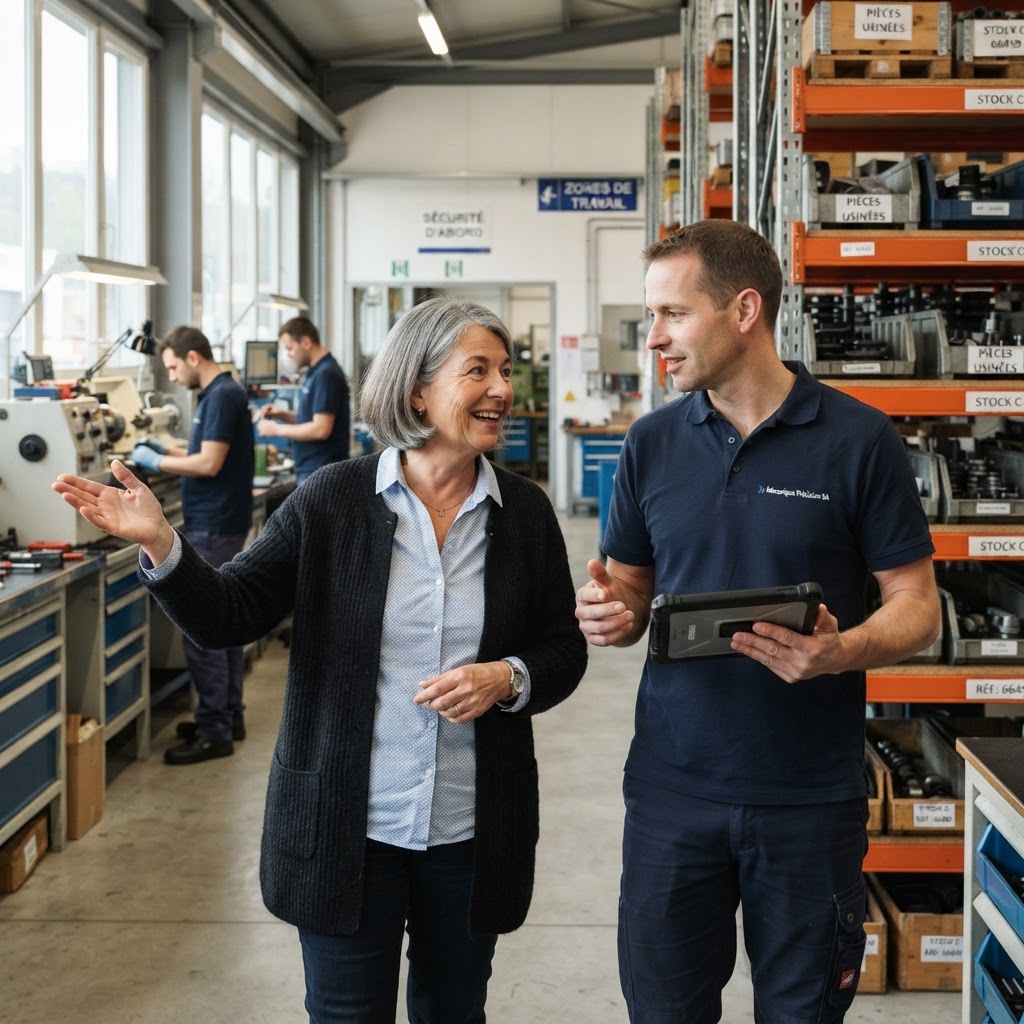
Consolidator, roll-up, growing group of SMEs: behind these terms lies a type of buyer that acquires several SMEs to build a lasting group, without dissolving them. Here is what concretely changes for you as the seller, for your teams and for your customers when you sell your French-speaking Swiss business to such a group, and the legitimate questions to ask before signing.
You are considering selling your business and you have heard talk of “consolidators”, “roll-ups” or “serial acquirers”? These terms describe a concrete and growing reality in French-speaking Switzerland: structures that progressively acquire several SMEs to form a coherent group, while preserving the identity of each entity. Before committing to a sale process, it is legitimate to understand what this type of buyer really represents — and how it differs from the other options available to you.
What is a growing group of SMEs — and how does it differ from other buyers?
When an owner-manager decides to sell their SME directly, they find themselves facing several categories of potential buyers. Each follows a different logic, with very concrete consequences for the future of your business.
The investment fund
A fund generally seeks to maximise a financial return over a five- to seven-year horizon, then to sell again. The business may be restructured, merged or sold on. Continuity is not the central priority.
The industry competitor
An acquisition by a competitor often aims to absorb market share, eliminate a rival offering or capture key skills. The brand, the teams and the processes are frequently integrated — or even dissolved — into the existing structure.
The individual buyer
An individual buyer often brings a strong entrepreneurial vision, but may lack stable financial resources, a support network or experience in running an established business.
The consolidator — or growing group of SMEs
A consolidator such as Vendre-Entreprise.ch follows a fundamentally different logic. The aim is neither to sell on quickly nor to absorb your business into a homogeneous whole. It is about building a lasting group of independent, complementary SMEs, each of which keeps its identity, its brand and its teams. Each acquisition is a building block of the group in its own right — not an asset to be optimised and then sold.
What changes for you, as the seller
Selling to a consolidator offers several practical advantages for the owner-manager who wants a smooth and secure transfer.
- A single point of contact with decision-making authority. You negotiate directly with the buyer, with no intermediary to stretch out timelines or dilute information. Decisions are taken in-house, which speeds up the process.
- Financing structured in advance. Unlike an individual buyer who still has to put together their bank file, a consolidator has pre-existing acquisition capacity. This considerably reduces the risk of failure at the end of the process.
- A supported transition period. It is entirely possible to remain involved in the business for a few months after the sale — to hand over to the teams, key customers and partners. This transition is planned and structured, not imposed.
- The option of remaining a minority shareholder. Depending on the case, some sellers wish to keep a minority stake in their company or in the group. That is an option serious consolidators know how to discuss and structure.
Would you like to know more about how the post-sale period actually unfolds? Read our dedicated article on the post-sale transition period.
What changes for your teams
This is often the question that worries business owners most when selling: what will become of my employees? The answer depends largely on the type of buyer.
Keeping jobs: a structural priority
In Switzerland, Article 333 of the Swiss Code of Obligations provides for the automatic transfer of employment contracts in the event of a business transfer. But beyond the legal obligation, a consolidator has a strategic interest in keeping jobs and skills in place: that human know-how is precisely what it is acquiring. Making people redundant after an acquisition would run counter to its own value-creation logic.
Preserving the brand and identity
Your company will not be renamed or merged into an anonymous entity. It keeps its name, its website, its email addresses, its communication materials. For your teams, this means strong continuity of identity — they carry on working for a company they recognise.
Pooling support functions, without dismantling
Certain cross-cutting functions — accounting, IT, group purchasing, human resources — may be progressively pooled at group level. The aim is not to cut positions, but to free your operational teams from time-consuming administrative tasks so they can focus on their core business.
For a full analysis of what happens to employees during a sale, we invite you to read our article: what happens to your employees after the sale of your SME?
What changes for your customers and suppliers
The fear of a breakdown in trust with customers is legitimate. In most cases, it is also unfounded when the sale is well structured.
Operational continuity as the basic principle
Your customers will continue to work with the same people: the account managers, the technicians, the project managers they know and trust. A change of owner does not mean a change in day-to-day business relationships.
Access to complementary skills
Belonging to a group of complementary SMEs can, over time, represent a concrete advantage for your customers: access to expertise your company did not have in-house, the capacity to take on larger projects, greater financial strength. It is an argument for loyalty, not a threat.
Controlled external communication
How the sale is communicated to customers and suppliers is planned jointly by the seller and the buyer. Nothing is left to chance: the timing, the key messages, the channels used. The shared objective is to reassure the company's ecosystem and to avoid any destabilising leak or rumour.
The legitimate questions to ask a consolidator before signing
Any serious buyer must be able to answer the following questions clearly. If the answers are evasive or vague, that is a warning sign.
- What is your concrete plan for my company in the first 12 to 24 months? A serious consolidator has a roadmap, even in broad strokes.
- How does local governance work after the sale? Who takes operational decisions? Is a managing director appointed, or do the existing teams keep their autonomy?
- Will my company's name be kept? This is a fundamental question for the continuity of the brand image.
- How long is my transition period expected to last? Is it set out in the contract? What is expected of me during this period?
- Can you put me in touch with other owners whose businesses you have acquired? Verifiable references are the best guarantee of seriousness.
- How do you manage synergies between the group's companies? Is pooling imposed, or proposed progressively?
These questions are not signs of distrust — they are the mark of a responsible business owner who wants to make sure their company, their teams and their customers will be in good hands.
Why consider a direct sale to Vendre-Entreprise.ch?
Vendre-Entreprise.ch is a direct buyer, not an intermediary, not a broker, not a business transfer adviser. We acquire French-speaking Swiss SMEs to integrate them permanently into a growing group, with a long-term outlook and respect for the identity of each entity.
In concrete terms, this means:
- You speak directly to the person who takes the purchase decision.
- You do not embark on an uncertain months-long process with no guarantee of an outcome.
- You benefit from a structured, discreet approach that respects what you have built.
- Your company continues to exist under its own name, with its teams and its values.
If you own an SME in French-speaking Switzerland and are considering a sale in the coming months or years, we invite you to start a first confidential conversation. There is no commitment and no rush — just an honest exchange to determine whether your company and our project are compatible.
Passing your business on to a group that respects it is possible. It is exactly what we are building, one SME at a time.
On the same topic
NDA, timelines, confidentiality, process: your questions about selling, answered in plain language in our FAQ.
See the FAQ