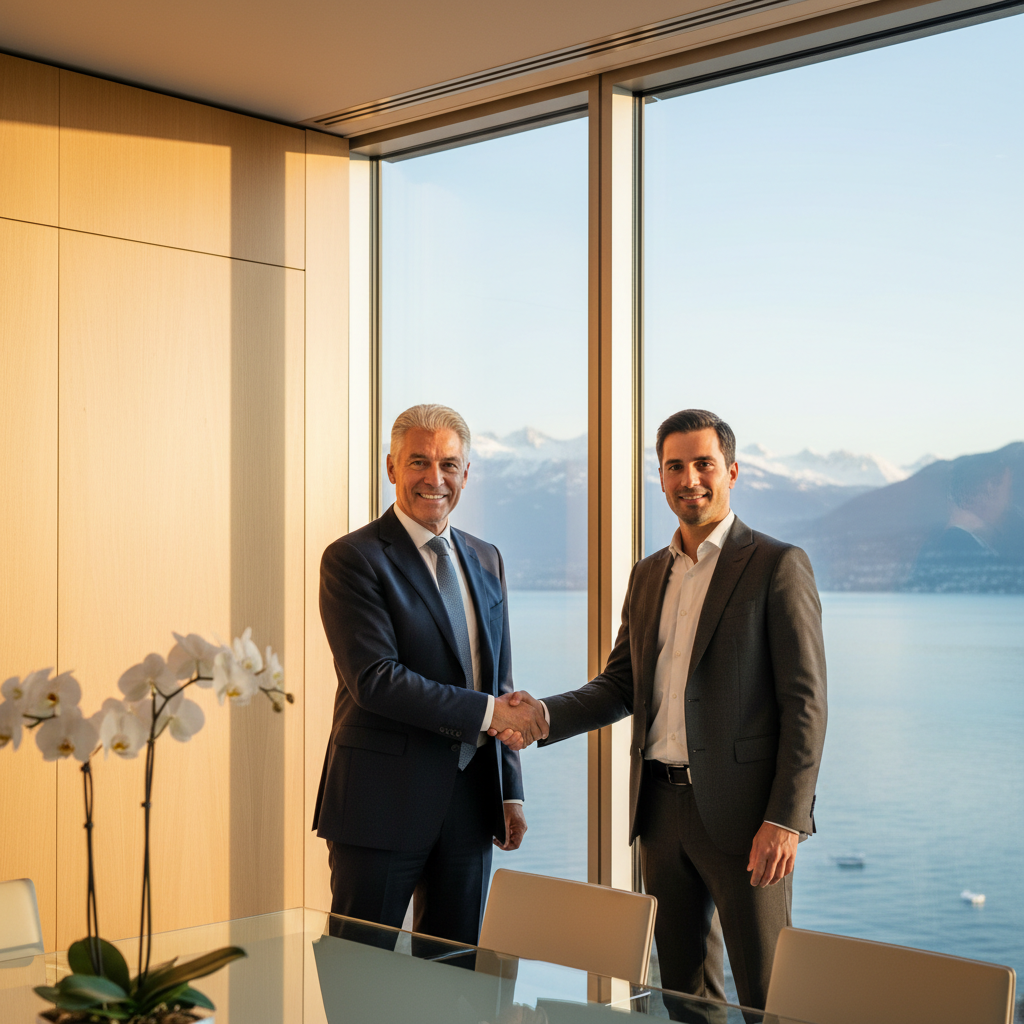
Selling Your SME Directly: Why More and More Swiss Business Owners Choose This Route
In French-speaking Switzerland, many SME owners prefer a direct sale to an identified buyer over a lengthy process run through an intermediary. Speed of closing, absolute discretion, a simple process and control of the timetable are among the most frequently cited reasons. This article explores the concrete advantages of a direct sale, the company profiles for which it is the natural choice, and the precautions to take to secure a private transaction.
In French-speaking Switzerland, business transfers are undergoing a notable shift. While traditional sale processes often go through intermediaries, M&A advisers or specialist platforms, a growing number of SME owners are choosing a different path: a direct sale to an identified buyer. Faster, more discreet and often less costly, this approach meets concrete, very real needs. But it cannot be improvised. Here is what you need to know before heading in this direction.
What is a direct sale of an SME?
A direct sale, also known as a private sale, refers to the process whereby a business owner negotiates the transfer of their company directly with a buyer, without going through a tender process or a mandate entrusted to a third party. The buyer may be a long-standing employee, a competitor, a business partner, a family member or an investor identified within the seller's network.
This type of transfer is fundamentally different from a classic sale process, in which an intermediary prepares an information memorandum, approaches several candidate buyers, manages the offers and supports the negotiations over several months, or even several years.
The reasons driving French-speaking Swiss business owners towards a direct sale
1. Speed of closing
A classic sale process can stretch over 12 to 24 months in French-speaking Switzerland. Preparing the file, searching for buyers, successive due diligence phases and negotiations considerably lengthen the timetable.
With a buyer identified in advance, the owner can complete a transaction in a few weeks to a few months, once both parties are aligned on the value, the payment terms and the transition conditions. This speed is often decisive, particularly for owners approaching retirement or facing a pressing health situation.
2. Absolute discretion
Confidentiality is one of the major concerns of SME owners in French-speaking Switzerland. When a company is officially "put up for sale", the risks are many:
- Anxiety among key employees, who may start looking for another job
- Wariness of customers and suppliers faced with uncertainty about the company's future
- Reactions from competitors who may take advantage of the transition period
- Pressure on ongoing commercial negotiations
By working directly with a trusted buyer, the seller drastically limits the circle of people in the know. The transaction can move forward in complete discretion, protecting the value of the business right up to closing day.
3. Control of the timetable and the process
Entrusting a mandate to an intermediary also means accepting the loss of some control over how the transaction unfolds. The seller has to align with the pace set by the adviser, respond to requests from multiple candidate buyers and sometimes sit through negotiations that get bogged down.
A direct sale puts the owner back at the centre of the process. They choose their counterpart, set the pace of discussions, decide on the level of transparency at each stage and keep control of the essential terms of the transaction. For many French-speaking Swiss entrepreneurs, this control is a value in itself.
4. Lower transaction costs
The fees of a business sale adviser generally represent between 3% and 7% of the sale price, sometimes more for smaller businesses. On an SME valued at CHF 2 million, that amounts to between CHF 60,000 and CHF 140,000.
By opting for a direct sale, the owner can save most of these costs. It nevertheless remains essential to engage a specialist lawyer and a chartered accountant to secure the transaction legally and from a tax perspective — an investment well below the fees of a full mandate.
Which SMEs are best suited to a direct sale?
A private sale is not suitable for every situation. Certain company and owner profiles lend themselves particularly well to it.
Companies with a natural, identified successor
This is the most common case. The owner has long had a successor in mind: a managing director who knows the company inside out, a partner who wishes to buy out the shares, a child who grew up in the family business or a trusted competitor looking to consolidate their market. In these configurations, a direct sale process is the natural choice.
SMEs with low sector visibility
For companies operating in very specific niches, the number of relevant potential buyers is often limited. Going through a generalist platform or a poorly specialised intermediary risks yielding unsatisfactory results. The owner, on the other hand, generally knows the players in their market very well and knows who to approach.
Family successions
Family succession still accounts for a significant share of SME sales in French-speaking Switzerland. It lends itself particularly well to a direct approach, although it requires specific precautions to avoid conflicts between heirs and to comply with the tax rules applicable to gifts or sales below market value.
The essential precautions for securing a direct sale
Choosing the direct route does not mean giving up on rigour. On the contrary, the absence of an intermediary requires the seller to be even more vigilant on several critical points.
Obtain an independent valuation
Before entering into any negotiation, it is essential to know the real value of your business. A chartered accountant or a business valuation specialist can establish a credible valuation range based on recognised methods (capitalisation of earnings, adjusted net assets, sector multiples). This gives the seller a solid basis for negotiation and avoids selling off a lifetime's professional assets on the cheap.
Prepare a complete sale file
Even without an intermediary, a structured presentation file is essential. It allows the buyer to quickly understand the company's situation and speeds up their decision-making. This file generally includes:
- A concise presentation of the business, the market and the competitive positioning
- The last three balance sheets and income statements, with adjustments where necessary
- A list of significant tangible and intangible assets
- An overview of the human structure (organisation chart, key contracts)
- The main customer and supplier contracts
- Any identified risks (disputes, dependencies, guarantees)
Formalise a letter of intent quickly
As soon as the broad terms have been accepted by both parties, it is strongly recommended to draw up a letter of intent (LOI). This document, non-binding in principle, locks in the essential points negotiated: indicative price, payment terms, scope of the sale, exclusivity clause and indicative timetable. It protects the seller from a buyer who might drag out negotiations while exploring other options.
Anticipate the tax aspects
In French-speaking Switzerland, the taxation of a business sale is complex and varies according to the company's legal form (SA or Sàrl), the nature of the assets sold and the canton concerned. Advance tax planning — ideally carried out two to three years before the sale — can significantly optimise the net proceeds of the sale. A corporate tax specialist is indispensable here.
Do not neglect seller-side due diligence
Due diligence is not merely a constraint imposed by the buyer. The seller has every interest in carrying out their own preliminary review to identify risk areas before the buyer discovers them. This strengthens the credibility of the file, speeds up the process and reduces the risk of the price being renegotiated during the transaction.
Direct sale and professional support: a false dichotomy
Opting for a direct sale does not mean going it alone. Most owners who succeed with this type of transaction surround themselves with a lawyer specialising in company law, a chartered accountant and sometimes a business transfer adviser for the strategic and relational aspects.
The difference from a classic mandate lies in the role of these professionals: their job is not to find the buyer or manage the commercial process. Their involvement is targeted at securing the legal, tax and financial aspects of the transaction. This approach combines the efficiency of a direct relationship with the rigour of professional support.
Key takeaways
A direct sale of an SME in French-speaking Switzerland is a serious and often wise option for owners who have an identified buyer and who wish to keep control of their transfer process. It offers concrete advantages in terms of speed, discretion, simplicity and cost.
In return, it demands rigorous preparation: an independent valuation, a complete sale file, tax planning and appropriate legal support. Properly conducted, a private sale can lead to a balanced, swift and satisfactory transaction for both parties — and above all to a successful transfer that preserves the fruit of a lifetime's work.
Are you considering selling your SME in French-speaking Switzerland and would like to explore the options available to you? Consult a business transfer specialist for an initial confidential analysis of your situation.
On the same topic
Thinking of selling? Tell us about your situation: we acquire healthy SMEs in French-speaking Switzerland directly, with no intermediary.
Let's talk about your SME